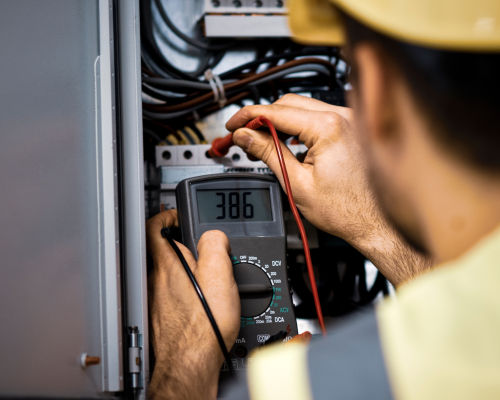
Plugging in a coffee maker requires little thought. Connecting a piece of commercial or industrial machinery? That deserves considerably more attention.
Modern equipment can demand substantial electrical loads, dedicated circuits, specialized controls, carefully selected conductors, and precise connections. One wiring mistake can cause more than an inconvenient tripped breaker. Improper installation can damage expensive machinery, create electrical hazards, interrupt production, or leave a business facing an unexpected repair bill.
For businesses throughout Union, NJ and Union County, professional equipment wiring provides the foundation for safe, reliable operation. The job calls for an electrician who understands the machinery, the electrical system supplying power, and the requirements that connect both.
Equipment Wiring Goes Beyond Connecting a Few Wires
Commercial and industrial equipment comes with electrical requirements that can look very different from standard building wiring. Depending on the application, machine and equipment wiring may involve motors, control panels, disconnects, transformers, sensors, dedicated circuits, or three-phase power. Manufacturers may also specify voltage, amperage, grounding, overcurrent protection, and connection requirements.
In other words, matching a red wire with another red wire will not earn anyone an honorary electrical engineering degree.
An experienced equipment wiring electrician evaluates the entire installation before energizing the machine. That process may include reviewing equipment specifications, calculating electrical loads, checking available panel capacity, selecting proper conductors and protective devices, and verifying connections.
Specialized Electricians Understand Electrical Loads
Heavy machinery can place significant demands on a building's electrical infrastructure. A commercial oven, compressor, production machine, pump, HVAC component, or other motor-driven equipment may require much more power than everyday electrical devices. Some machinery also creates a large electrical demand during startup.
Before completing industrial equipment wiring, an electrician needs to determine whether the existing electrical system can safely support the additional load.
That evaluation could uncover the need for a dedicated circuit, larger conductors, different overcurrent protection, a panel upgrade, or changes to the building's electrical distribution system.
Skipping that homework can lead to nuisance breaker trips, overheating, equipment problems, and downtime. Few business owners want to discover an electrical capacity problem halfway through the Monday morning rush.
Three-Phase Equipment Adds Another Layer of Complexity
Many commercial and industrial facilities rely on three-phase power for motors and heavy equipment.
Three-phase systems can efficiently supply larger electrical loads, but installation and troubleshooting require specialized knowledge. An electrician must account for voltage requirements, phase configuration, load balancing, motor connections, and appropriate protection.
Incorrect connections can prevent a motor from operating properly and potentially damage equipment. Proper three-phase electrical wiring helps machinery perform according to manufacturer specifications while protecting the electrical system that supports the equipment.
Businesses with manufacturing equipment, commercial HVAC systems, pumps, compressors, and other high-demand machinery should work with an electrician experienced in commercial and industrial applications.
Proper Equipment Wiring Protects Workers and Property
Faulty connections, undersized conductors, inadequate grounding, and improper overcurrent protection can create serious hazards. Commercial and industrial environments add another concern because employees may work around energized machinery throughout the day.
OSHA's electrical safety requirements restrict certain electrical work to qualified persons. OSHA defines qualified individuals based on training and demonstrated knowledge related to electrical equipment and hazards.
Professional commercial equipment wiring helps reduce risks by addressing proper grounding, circuit protection, disconnecting means, wiring methods, and other safety considerations before machinery enters service.
Specialized electricians also know how to troubleshoot problems safely. Rather than guessing which component caused a malfunction, a trained electrician can test the electrical system and identify the source of a problem systematically.
New Jersey Electrical Codes Matter Too
New Jersey regulates electrical installations through the state's Uniform Construction Code and electrical subcode. As of August 17, 2026, New Jersey lists the 2023 National Electrical Code (NFPA 70) as its adopted electrical subcode.
Code requirements can affect wiring methods, conductor sizing, grounding and bonding, overcurrent protection, disconnects, equipment installation, and other aspects of a commercial electrical project.
Certain projects may also require electrical permits and inspections. New Jersey provides a dedicated Electrical Subcode Technical Section as part of its construction permit process.
A professional industrial electrical contractor can evaluate the project requirements before work begins and complete installations with applicable codes and safety requirements in mind.
Specialized Wiring Helps Protect Expensive Equipment
Poor electrical connections can contribute to voltage problems, excessive heat, unreliable operation, premature component failure, or complete equipment shutdown. Even when the machinery survives, downtime can quickly become expensive.
Professional machinery electrical wiring helps protect that investment by supplying power according to the equipment's requirements.
An electrician can also examine the electrical infrastructure surrounding the machine. If an aging panel, overloaded circuit, deteriorated wiring, or inadequate service creates a weak link, correcting the underlying problem can help support dependable long-term operation.
Equipment Wiring Should Support Future Business Needs
Businesses rarely remain the same forever. A warehouse may add another machine. A fabrication shop may replace equipment with a larger model. A commercial property may expand production or renovate part of the building. Good industrial electrical installation considers those possibilities.
An experienced electrician can evaluate existing electrical capacity and discuss whether a proposed installation leaves reasonable room for future needs. Planning ahead may help a business avoid unnecessary modifications when the next piece of equipment arrives. Nobody wants a shiny new machine sitting quietly in the corner because the electrical system cannot support the new addition.
When Should You Call an Equipment Wiring Electrician?
Businesses should consider professional electrical help whenever a project involves new machinery, relocated equipment, increased electrical loads, dedicated circuits, control wiring, motor wiring, three-phase equipment, panel modifications, or recurring equipment-related electrical problems.
Warning signs such as frequently tripped breakers, unusual heat around electrical components, inconsistent equipment performance, burning odors, or unexplained shutdowns also deserve prompt professional attention.
Avoid treating those symptoms as quirks of an aging machine. An electrical problem may sit upstream from the equipment itself.
Professional Equipment Wiring in Union, NJ
All City Electric has served commercial and industrial customers since 2003 and provides electrical wiring, machine wiring, panel replacements, service upgrades, generators, lighting, troubleshooting, and other electrical services. The company's local equipment-wiring services focus on properly planning, connecting, balancing, and testing systems that support commercial and industrial machinery.
Whether your business needs commercial equipment wiring, a new machine connection, an electrical service upgrade, or help diagnosing equipment-related electrical problems, specialized expertise can protect your people, property, machinery, and productivity.
Need professional equipment wiring in Union, NJ or a nearby community? Call All City Electric at (908) 497-9977 to discuss your commercial or industrial electrical needs.